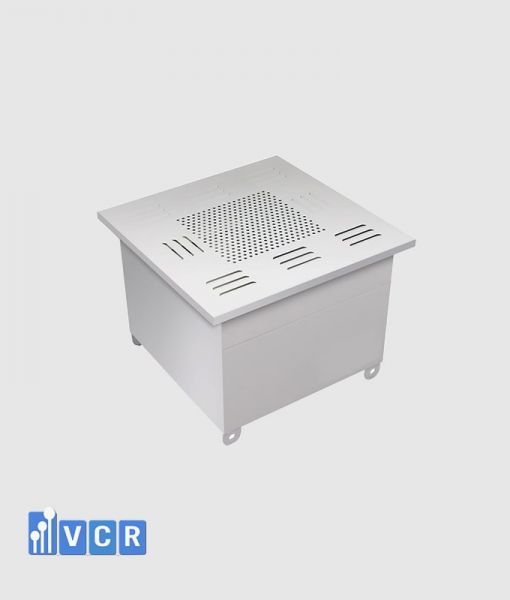
In real-world implementation, “VCR Cleanroom Equipment” has found that many systems fail not because of poor equipment, but because the HEPA Box configuration does not match the actual application requirements.
How should a HEPA Box be selected at the initial cleanroom design stage?
To select a suitable HEPA Box, it is necessary to clearly define the cleanroom classification according to ISO 14644 or GMP, required airflow, air change rate, and pressure differentials between zones, then configure the unit accordingly to meet environmental control objectives. In addition, cleanroom layout must be analyzed to determine proper placement and density of HEPA Boxes to ensure even airflow distribution and avoid dead zones or turbulence. Selection should not be based solely on equipment specifications but must be aligned with the overall HVAC system design, as incorrect initial choices can lead to costly adjustments and unstable operation later.
How should HEPA Box size be selected to ensure proper airflow and system performance?
The size of a HEPA Box should be determined based on design airflow, room area, ceiling height, and airflow distribution requirements to ensure uniform air supply. If undersized, airflow may be insufficient to achieve required cleanliness levels, while oversized units can lead to energy waste and difficulty in airflow control. Proper sizing must also consider ceiling system compatibility and installation constraints to maintain HVAC system consistency and performance.
How should HEPA Box materials be selected to meet GMP requirements and ensure durability?
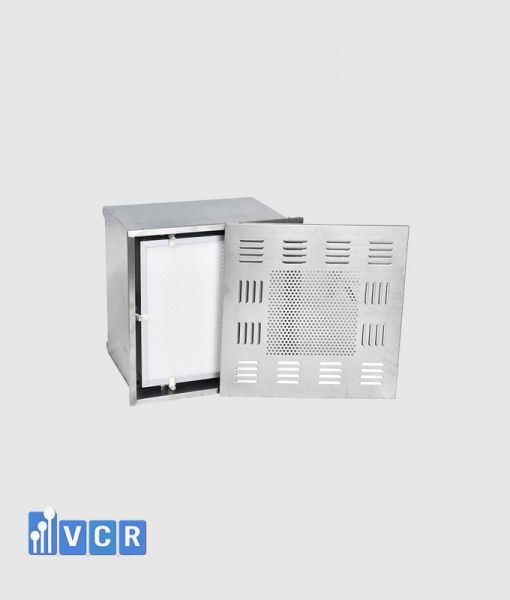
HEPA Box materials must be non-particle generating, corrosion-resistant, and easy to clean, which is why stainless steel or high-quality powder-coated steel are commonly used depending on application. In sterile pharmaceutical environments, stainless steel is preferred due to its chemical resistance and cleanability, while less critical areas may use coated steel for cost optimization. Correct material selection ensures long service life and GMP compliance.
When is a high-end HEPA Box configuration required instead of a standard one?
High-end configurations are required when strict particle and microbial control is needed, especially in sterile or high-risk environments where unidirectional airflow and high stability are essential. Systems requiring continuous monitoring, quick filter replacement, or advanced control integration also benefit from upgraded configurations. Proper investment reduces operational risks and long-term costs.
Which HEPA Box configuration is suitable for GMP Grade B cleanrooms?
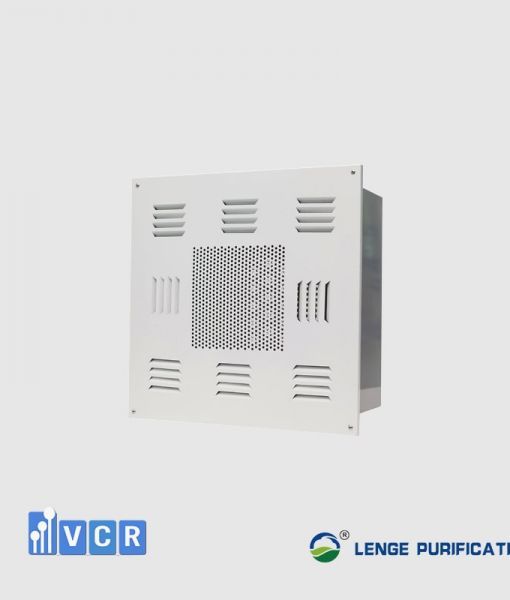
For Grade B cleanrooms, HEPA Boxes must provide high filtration efficiency, airtight construction, and stable airflow distribution to maintain strict environmental conditions. Designs with diffusers and robust sealing are typically preferred to ensure no leakage and uniform air distribution. Proper integration with the HVAC system is essential to maintain accurate pressure differentials and airflow control in compliance with GMP requirements.
Should HEPA Boxes be selected based on specific industry requirements?
Yes, each industry has different contamination control needs, so HEPA Box selection must align with specific applications such as pharmaceuticals, electronics, or food processing.
Should HEPA Boxes be selected based on ISO cleanroom class?
Yes, cleanroom classification determines filter grade, unit density, and configuration requirements.
Should airflow design influence HEPA Box selection?
Yes, airflow is a critical factor, and improper selection can lead to uneven distribution and poor environmental control.
Should cleanroom layout affect HEPA Box selection?
Yes, layout determines placement and distribution strategy to avoid dead zones.
Should pressure differentials be considered when selecting HEPA Boxes?
Yes, airflow supplied by HEPA Boxes directly impacts pressure balance between zones.
Is it beneficial to choose HEPA Boxes with dampers?
Yes, dampers allow flexible airflow adjustment and system balancing.
Should HEPA Boxes include diffusers?
Diffusers are recommended for uniform airflow distribution, especially in sensitive areas.
Is easy filter replacement an important selection factor?
Yes, easy replacement reduces downtime and maintenance costs.
Should HEPA Boxes include monitoring features?
Yes, monitoring allows real-time performance tracking and early issue detection.
Should HEPA Boxes be selected based on existing HVAC systems?
Yes, compatibility ensures stable and efficient system operation.
Should long-term maintenance be considered during selection?
Yes, maintenance requirements directly affect lifecycle cost and system reliability.
Must HEPA Boxes comply with ISO standards?
Yes, ISO compliance is essential to achieve required cleanliness levels.
Must HEPA Boxes comply with GMP requirements?
Yes, GMP compliance is mandatory in regulated industries such as pharmaceuticals.
Is selecting HEPA Boxes based only on price advisable?
No, choosing based solely on price can lead to improper configuration and higher long-term costs due to system inefficiencies.
How can HEPA Box configuration be optimized between cost and long-term performance?
Optimal configuration requires balancing technical requirements and budget by accurately defining cleanliness class, airflow, number of units, and required system integration without over- or under-designing. Additionally, factors such as maintenance, lifespan, and future scalability must be considered to ensure long-term flexibility and efficiency. A well-configured system ensures stable operation, energy savings, reduced maintenance costs, and sustained compliance with ISO and GMP standards.
Duong VCR