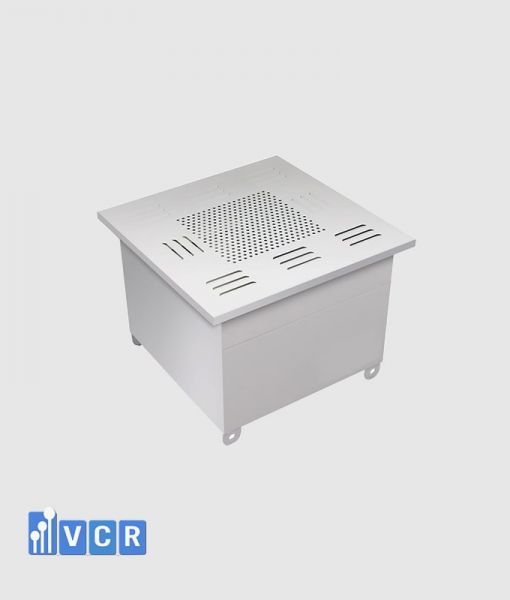
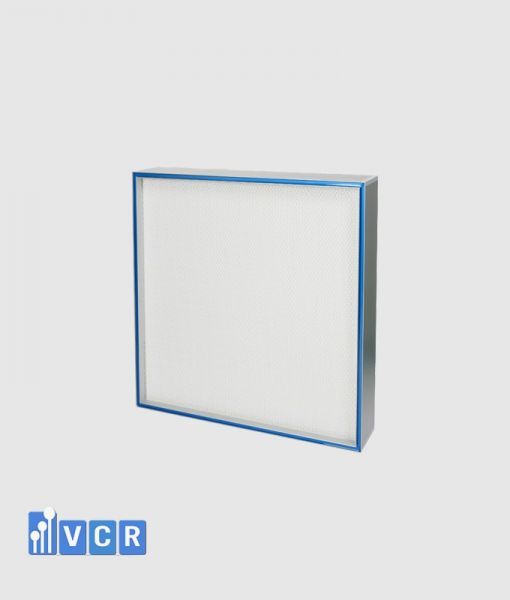
In real-world implementation, “VCR Cleanroom Equipment” has found that many systems fail not because of equipment quality, but due to installation errors, especially in details like gasket sealing, alignment, and airflow balancing.
What are the correct steps for installing a HEPA Box to ensure technical accuracy and avoid deviations?
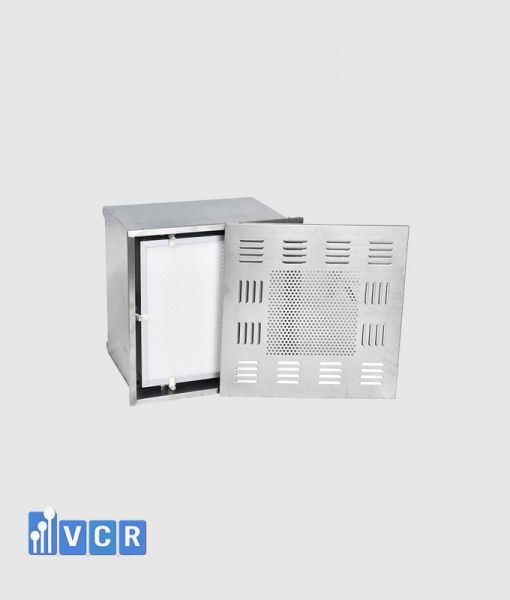
The installation process begins with reviewing HVAC design drawings and ceiling layout to confirm correct positioning, followed by precise placement and secure mounting of the HEPA Box onto the ceiling support structure. Next, the unit is connected to ductwork with airtight sealing, and the HEPA filter is installed with uniform clamping force to prevent leakage. After installation, alignment and airtightness must be verified, airflow balanced, and DOP/PAO testing performed to confirm filtration performance. A complete and controlled process ensures stable operation and compliance from the beginning.
Where should HEPA Boxes be installed to optimize airflow and environmental control?
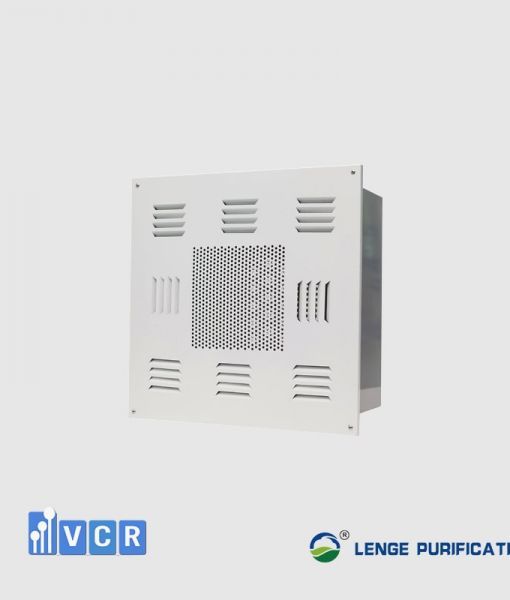
HEPA Boxes are typically installed on the cleanroom ceiling at positions determined by layout, airflow requirements, and room design to ensure uniform air distribution. Placement must avoid dead zones and turbulence while supporting pressure differentials between areas. In high-grade environments such as aseptic zones, HEPA Boxes are arranged in grid patterns to achieve unidirectional airflow. Correct positioning is critical for system performance and compliance.
How should spacing between HEPA Boxes be determined for proper airflow distribution?
Spacing should be calculated based on airflow requirements, room size, ceiling height, and cleanliness classification to ensure full coverage without gaps or excessive overlap. Too wide spacing can create insufficient airflow zones, while too close spacing increases cost and complicates system balancing. Proper spacing must follow detailed HVAC design calculations and, when necessary, airflow simulation.
What factors must be controlled during installation to ensure airtightness?
Airtightness is critical and requires correct gasket installation, proper sealing of duct connections, and tight integration with the ceiling system. Uniform filter clamping pressure must also be ensured to prevent bypass leakage. Poor sealing reduces filtration efficiency and leads to non-compliance with ISO and GMP standards.
What are the most common installation errors and their impact on the system?
Common errors include incorrect positioning, poor sealing, misaligned filters, damaged gaskets, and failure to perform airflow balancing or DOP/PAO testing. These issues can result in air leakage, uneven airflow distribution, and failure to meet cleanliness requirements, ultimately affecting system performance and audit outcomes.
Is alignment checking necessary during installation?
Yes, alignment ensures proper positioning relative to airflow direction and prevents turbulence or performance issues.
Is airtightness testing required after installation?
Yes, airtightness must be verified to ensure no bypass air enters the cleanroom.
Is DOP/PAO testing required after installation and why?
Yes, it verifies filter integrity and confirms that no leakage occurs across the filter surface.
Is airflow balancing required after installation?
Yes, airflow balancing ensures uniform distribution and stable pressure differentials.
Should pressure differentials be checked after installation?
Yes, pressure checks confirm system stability and design compliance.
Should HEPA Boxes be installed in coordination with HVAC systems?
Yes, synchronized installation ensures compatibility and optimal system performance.
Should HEPA Boxes be cleaned before operation?
Yes, cleaning prevents contamination from construction residues entering the cleanroom.
Should HEPA Boxes be protected during construction?
Yes, protection prevents filter damage and contamination before commissioning.
Should HEPA filters be inspected before installation?
Yes, filters must be checked to ensure no defects or damage.
Should installation follow a defined sequence?
Yes, proper sequence ensures quality control and reduces installation errors.
Is commissioning required after installation?
Yes, commissioning confirms that the system meets design and operational requirements.
What should be included in a HEPA Box commissioning checklist?
The checklist includes position verification, airtightness, filter condition, airflow, pressure differential measurements, DOP/PAO test results, and documentation review to ensure full compliance.
Is technician training necessary for HEPA Box installation?
Yes, trained personnel reduce errors and ensure correct installation practices.
Should installation documentation be recorded?
Yes, documentation supports audits, traceability, and long-term system management.
How can correct HEPA Box installation be ensured from the beginning to avoid long-term system issues?
Correct installation requires strict adherence to design drawings, experienced technicians, detailed checks of positioning, sealing, filter integrity, airflow balancing, and full post-installation testing including DOP/PAO and pressure verification. Proper documentation and training ensure consistent operation after installation. A well-executed installation process ensures stable system performance, reduces maintenance costs, and guarantees ISO and GMP compliance throughout the lifecycle.
Duong VCR