
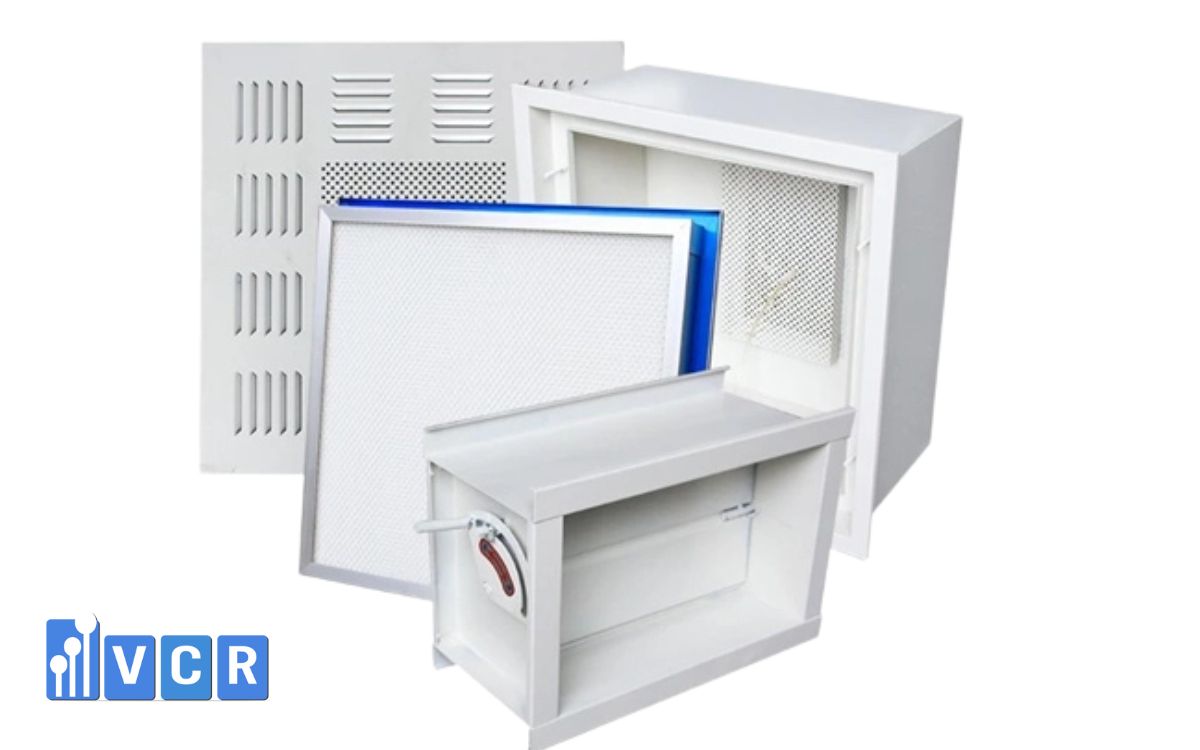
When purchasing HEPA filters for cleanrooms, many buyers first ask: “Does the product come with CO and CQ?” These documents are important, especially for imported products and projects with strict acceptance requirements. However, having CO and CQ does not necessarily mean that each HEPA filter has been individually tested for filtration efficiency and integrity. To properly evaluate a HEPA filter, it is important to understand the purpose of each document.
- What is a CO for a HEPA filter?
- What does a CQ for a HEPA filter mean?
- What is a HEPA filter test certificate?
- What do H13 and H14 certificates indicate?
- What does pressure drop on a HEPA test certificate mean?
- What is the difference between a factory test and an on-site test?
- What is the difference between CO, CQ, and a HEPA test certificate?
- What documents should be requested when purchasing HEPA filters?
- Does having CO and CQ mean that a HEPA filter is high quality?
- Can a HEPA certificate replace cleanroom testing?
- Frequently Asked Questions About CO, CQ, and HEPA Filter Certificates
- HEPA Filter Selection Should Go Beyond CO and CQ
When purchasing HEPA filters for cleanrooms, many buyers first ask: “Does the product come with CO and CQ?” These documents are important, especially for imported products and projects with strict acceptance requirements. However, having CO and CQ does not necessarily mean that each HEPA filter has been individually tested for filtration efficiency and integrity. To properly evaluate a HEPA filter, it is important to understand the purpose of each document.
What is a CO for a HEPA filter?
CO – Certificate of Origin is a document used to certify the country or territory of origin of a product. For imported HEPA filters, the CO helps verify where the goods originated in accordance with applicable trade and customs requirements.
For example, a HEPA filter imported from Germany, Turkey, Malaysia, or China may be supplied with a CO corresponding to the shipment. This document can be particularly important for customs clearance, commercial contracts, project documentation, and situations where the owner requires evidence of product origin.
However, the limitations of a CO must be clearly understood. A CO is not evidence of filtration efficiency.
A HEPA filter with a German CO does not automatically mean that the filter is H14. Likewise, a CO from a country with a highly developed filtration industry does not prove that each individual filter has been tested for leakage or filtration efficiency.
In simple terms, a CO mainly answers the question: Where does the product come from?
It does not fully answer the more important technical question: Does this particular HEPA filter actually meet the required performance?
This distinction is very important when reviewing HEPA filter documentation.
What does a CQ for a HEPA filter mean?
CQ – Certificate of Quality is a document confirming that a product has been manufactured or supplied in accordance with specified quality characteristics, standards, or declared technical specifications.
Depending on the manufacturer, a CQ may contain information such as the product name, model, dimensions, filter class, frame material, filter media, rated airflow, and applicable standard.
For a cleanroom project, the CQ is often part of the quality documentation package together with the CO, packing list, invoice, datasheet, and other technical documents.
However, CQ also needs to be understood correctly.
A CQ stating that a HEPA filter is H14 does not necessarily mean that the document contains individual test results for the exact filter delivered to the customer.
In some cases, a CQ serves as a general quality declaration for a product type or shipment based on the manufacturer's quality control system. For critical applications, the end user may require more detailed documentation showing how a particular filter with a specific serial number was actually tested.
This is where the HEPA filter test certificate becomes important.
What is a HEPA filter test certificate?
A test certificate is a document presenting the technical test results of a filter according to a defined test method or standard used by the manufacturer.
For high-quality HEPA filters, especially those used in pharmaceutical, electronics, semiconductor, medical device, laboratory, or other highly controlled applications, each filter may be assigned a unique serial number linked to its individual test results.
A test certificate may include the filter model, dimensions, serial number, test airflow, filtration efficiency, pressure drop, and the test standard used.
The main value of this document is traceability: a specific physical filter can be linked to specific test data.
For example, if a customer receives 20 H14 HEPA filters and every filter has its own serial number and corresponding test certificate, traceability is considerably stronger than having only one general CQ covering the entire shipment.
For facilities with strict quality management systems, this traceability is valuable during installation, qualification, maintenance, troubleshooting, and future filter replacement.
What do H13 and H14 certificates indicate?
HEPA filters are commonly classified according to international standards such as EN 1822 or ISO 29463.
Under the EN 1822 classification system, an H13 HEPA filter has a minimum overall efficiency of 99.95%, while an H14 HEPA filter has a minimum overall efficiency of 99.995%, under the test conditions specified by the standard.
It is important not to interpret these values simply as “the filter removes 99.995% of every particle under all operating conditions.” HEPA classification is based on standardized test procedures and pays particular attention to the particle size range that is most difficult for the filter to capture.
The relevant concept is MPPS – Most Penetrating Particle Size, meaning the particle size at which penetration through the filter media is highest and filtration efficiency is at its lowest.
Testing around the MPPS provides a more demanding and technically meaningful assessment of HEPA filter performance.
Therefore, when purchasing H13 or H14 filters, buyers should not rely only on an “H13” or “H14” label. They should also verify the classification standard used by the manufacturer and whether appropriate test documentation is available.
What does pressure drop on a HEPA test certificate mean?
Pressure drop is an important HEPA filter parameter that is sometimes overlooked during purchasing.
As air passes through the filter media, resistance is created. The fan or AHU must generate sufficient pressure to overcome this resistance while maintaining the required airflow.
Two H14 HEPA filters can provide the same filtration classification but have different pressure drops. This difference can affect fan requirements, system operating conditions, and energy consumption.
The initial pressure drop is also an important reference value for monitoring the filter after installation. As dust accumulates during operation, filter resistance generally increases. A differential pressure gauge or differential pressure transmitter can be used to monitor this trend.
However, an increase in differential pressure does not directly mean that the HEPA filter is leaking. It primarily indicates an increase in airflow resistance.
Likewise, a leaking HEPA filter may not necessarily produce a significant change in differential pressure.
Therefore, differential pressure monitoring and HEPA integrity testing are two different activities serving different purposes.
What is the difference between a factory test and an on-site test?
This is one of the most important distinctions when evaluating HEPA filter documentation.
A factory test verifies that the filter meets specified technical criteria before it leaves the manufacturing facility. A test certificate based on this test provides valuable evidence of the filter's condition at the time of manufacture.
However, after leaving the factory, the filter must still undergo packaging, transportation, storage, movement around the construction site, and installation.
Several risks can arise during these stages.
The filter media may be damaged by impact. The frame may become distorted. The gasket may be incorrectly positioned. The filter may not be properly compressed against the HEPA housing. Sealant may be damaged, or the mounting system may leave a leakage path.
As a result, a filter that passed all factory tests can still develop leakage after it is installed.
For this reason, high-requirement cleanroom systems may require an in-situ HEPA filter integrity test after installation.
This test evaluates the installed filter assembly rather than only the filter media. Potential leakage paths around the frame, gasket, seal, and mounting system can therefore also be assessed.
A factory test certificate does not completely replace an on-site HEPA integrity test.
What is the difference between CO, CQ, and a HEPA test certificate?
The three documents can be understood simply.
CO answers: Where does the filter come from?
CQ answers: What quality does the manufacturer or supplier declare for the product?
Test certificate answers: How was this specific filter tested, and what were the actual results?
An on-site integrity test answers another question: After transportation and installation, is the installed HEPA filter system still properly sealed and performing as required?
These documents and tests complement one another. They do not replace one another.
For this reason, a good HEPA filter documentation package should not stop at CO and CQ alone.
What documents should be requested when purchasing HEPA filters?
The required documentation depends on the industry, the criticality of the system, the URS – User Requirement Specification, and the project's acceptance requirements.
For high-control applications, the purchasing specification should clearly define whether a CO is required, whether the CQ applies to the shipment or individual filters, whether individual test certificates are required, whether filters need unique serial numbers, which classification standard applies, and which test data must be provided.
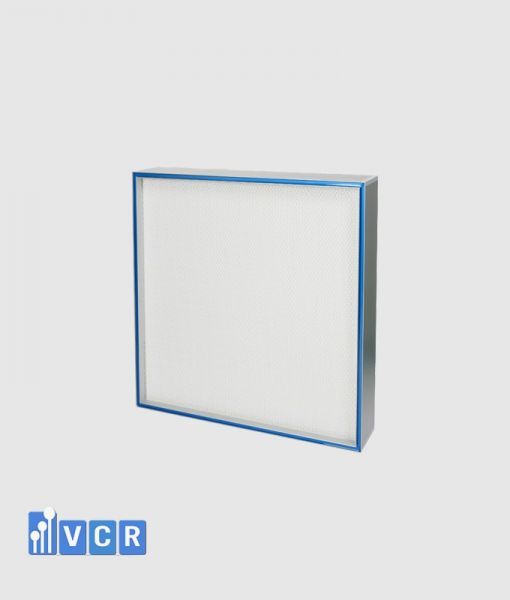
The product datasheet, identification label, installation direction, rated airflow, initial pressure drop, and recommended operating conditions should also be reviewed.
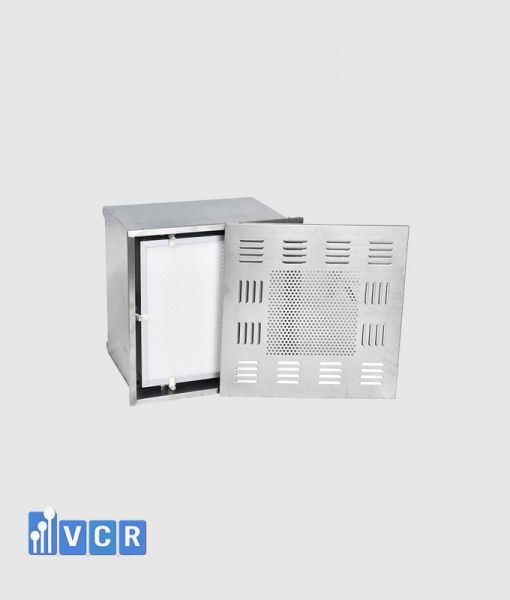
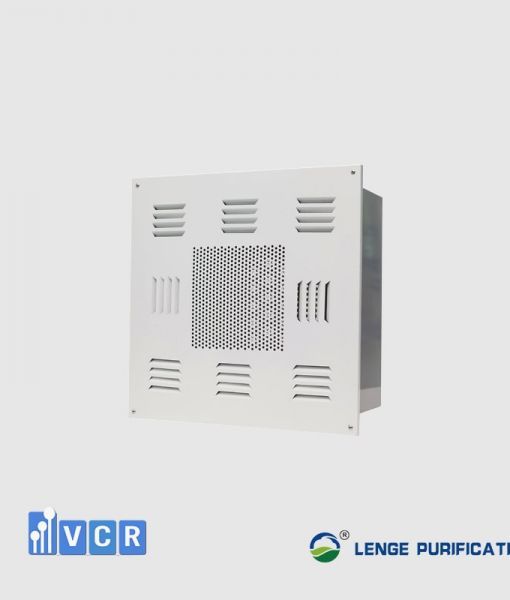
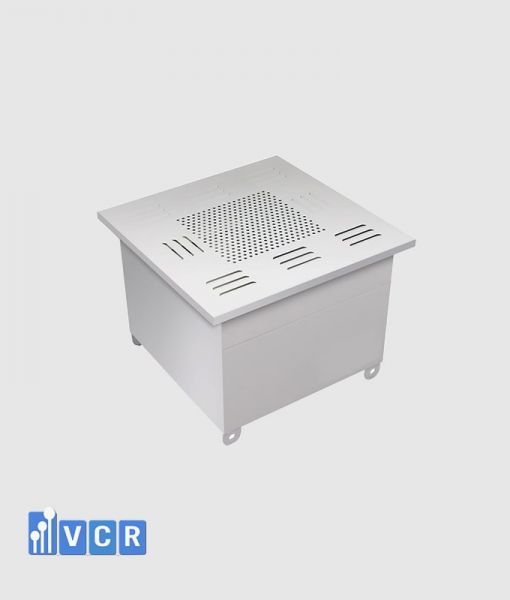
If the project requires an on-site HEPA integrity test, the HEPA Box or filter housing should also be designed to support the test procedure. It is much easier to consider testing requirements during equipment selection and system design than to retrofit test access after installation.
Does having CO and CQ mean that a HEPA filter is high quality?
Not necessarily.
CO and CQ are important documents, but HEPA filter quality depends on many additional factors, including the filter media, manufacturing process, frame integrity, sealant, gasket quality, factory quality control, and actual test results.
Two HEPA filters may both come with CO and CQ while having significantly different performance and construction quality.
Therefore, buyers should evaluate the complete technical documentation rather than checking only whether CO and CQ are available.
For HEPA filters used in pharmaceutical plants, semiconductor facilities, electronics cleanrooms, or other critical applications, individual serial-number traceability and filter-specific test certificates can be particularly valuable.
Can a HEPA certificate replace cleanroom testing?
No.
This is one of the most common misunderstandings when purchasing HEPA filters.
A factory certificate reflects the condition of the filter when it was tested at the manufacturer's facility. After transportation and installation, the filter system needs to be evaluated in its actual installed condition when required by the application.
A HEPA filter itself is only one component of the complete filtration system.
The HEPA Box, FFU, filter frame, gasket, compression mechanism, and installation workmanship all influence the final integrity of the installed system.
Therefore, where an in-situ HEPA integrity test is required, having an H14 certificate is not a reason to omit the test after installation.
Instead, combining factory documentation with on-site integrity testing provides a more complete technical evidence chain.
Frequently Asked Questions About CO, CQ, and HEPA Filter Certificates
What is a HEPA filter CO used for?
A CO is mainly used to certify the origin of the goods. It does not directly prove that an individual filter meets H13 or H14 filtration efficiency.
Is a CQ the same as a HEPA test certificate?
Not necessarily. A CQ generally certifies the quality or specification of the product or shipment, while a test certificate may provide actual test results for an individual HEPA filter.
What is the minimum efficiency of an H14 HEPA filter?
Under EN 1822 classification, an H14 filter has a minimum overall efficiency of 99.995% under the conditions and test methodology specified by the standard.
What is the minimum efficiency of an H13 HEPA filter?
Under EN 1822 classification, an H13 filter has a minimum overall efficiency of 99.95%.
Is the serial number on a HEPA filter important?
Yes, particularly for projects requiring strong traceability. A unique serial number can link the physical filter to its corresponding documentation and individual test certificate.
What does pressure drop on a HEPA test certificate indicate?
Pressure drop represents the airflow resistance of the filter under a specified test condition. It is important for fan selection, system design, and monitoring changes in filter resistance during service.
Is an on-site HEPA test still required if a test certificate is provided?
If the cleanroom system or applicable qualification requirements call for an installed integrity test, then yes. A factory test and an in-situ integrity test serve different purposes.
Do CO and CQ prove that a HEPA filter has no leakage?
No. CO and CQ do not verify the leak-tightness of the installed HEPA filter system. An appropriate integrity test is required when leakage verification is necessary.
HEPA Filter Selection Should Go Beyond CO and CQ
In cleanroom projects, CO and CQ are necessary documents in many situations, but they represent only part of the overall quality documentation. A proper HEPA filter evaluation should consider origin, classification standard, test certificate, serial number, filtration efficiency, pressure drop, and traceability.
More importantly, it is necessary to distinguish between the quality of the filter when it leaves the factory and the condition of the complete system after installation. Transportation, storage, and installation can all affect a HEPA filter, which means factory test results alone do not automatically guarantee that the installed system is completely leak-free.
Vietnam Cleanroom Equipment (VCR Cleanroom) supplies HEPA filters and cleanroom equipment for cleanroom contractors and manufacturing facilities in the pharmaceutical, food, electronics, semiconductor, medical device, and other controlled-environment industries. When selecting HEPA filters, requirements for CO, CQ, individual test certificates, serial-number traceability, and technical documentation should be clearly defined at the purchasing stage to support acceptance, qualification, traceability, and long-term filter management.
A simple way to remember the difference is: CO tells you where the filter comes from, CQ confirms the declared quality, the test certificate provides actual test data, and the post-installation integrity test verifies the real condition of the installed HEPA filtration system.
In a cleanroom, documentation matters, but actual test data provides the strongest evidence that the filtration system is performing as intended.